


|
#1
 October 23rd, 2014, 12:04 PM
|
|||
|
|||
 Cadaver Dogs: The Sherlock Bones of the K-9 Police
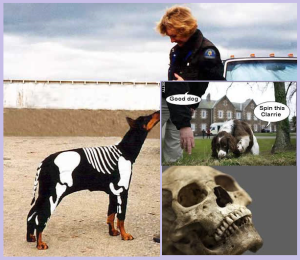 Their powerful sense of smell. One of the dog’s natural trait is its astounding sense of smell. In fact, a dog’s sense of smell is 100 times accurate and stronger than any human. Thus, there is a particular classification of working dogs whose noses and their keen sense of smell have been developed to do an important role in crime forensics. These dogs are called cadaver dogs. A cadaver dog is a classification of a search and rescue canine who are further categorized as ‘airscenting’ or trailing dogs. Cadaver dogs are specially trained canines to trace and follow the scent of a decomposing human flesh. Although their task was not a pretty thing to do and not the ordinary canine task of search and rescue, their job was vital not only to the families of a crime’s victims but pretty much helpful to the justice system that need a body to prove a crime. These dogs deal on the detection of scent of decomposing bodies above the soil and ground. The same principle in a canine’s search and knowhow of where he last buried his bone. Breed and training. Although breed is not a factor for being a cadaver dog, but a well-built dog is needed to endure long hours of search and trailing. Training for a cadaver dog starts at the age range from 9 to 18 months. Training can take up from 4 to 18 months to complete allowing the dog to properly mature and develop their aptitude and skills in their sense of smell. Aside from searching and locating cadavers on crime related assignments, they are also trained on various types of assignments such as disaster response and rescue. Smell and Fetch! It is said that the task of a cadaver dog can be the biggest challenge in a forensic investigation. Finding a corpse that may have been hidden on piles of dirt, soil and other rubbles is always a difficult place to be especially for humans. But canines whose role was to seek for the scent of a decomposing body the task was just an ordinary play of seeking an object given some point of scent their handler would give them to seek about. It is basically an ordinary game of ‘Fetch!’ to them no matter how stinky the object of the game was. In order to give due credits to a few of these cadaver dogs whose immense contribution in bringing and finding justice to the bodies they’ve found. In human remains detection, a canine’s nose knows best and can be relied upon in helping solve forensic cases. 
__________________
http://allinadogslife.wordpress.com/ 
|

«
Previous Thread
|
Next Thread
»


 Threaded Mode
|
|

Forum Terms of Use
- All Bulletin Board Posts are for personal/non-commercial use only.
- Self-promotion and/or promotion in general is prohibited.
- Debate is healthy but profane and deliberately rude posts will be deleted.
- Posters not following the rules will be banned at the Admins' discretion.
- Read the Full Forum Rules
Forum Details
- Powered by vBulletin® Version 3.8.8
Copyright ©2000 - 2026, vBulletin Solutions, Inc.
vBulletin Optimisation by vB Optimise (Reduced on this page: MySQL 0%). - All times are GMT -5. The time now is 06:02 PM.